


How to Choose LED High Bays for Warehouse Lighting
How to Choose LED High Bays for Warehouse Lighting
To choose LED high bays for warehouse lighting, start with the space: ceiling height, aisle layout, work tasks, existing voltage, mounting method, and whether the area needs a round UFO high bay or a linear high bay. Use lumens and light distribution to size the job, not wattage alone. Then verify CCT, CRI, input voltage, dimming, ratings, and certifications before ordering.
This guide is for contractors, facility teams, property managers, and commercial buyers who need a practical way to narrow the fixture list before requesting a quote or placing a project order.
Quick Decision Checklist
- Confirm the application: storage, picking, manufacturing, retail warehouse, gym, shop, or back-of-house work area.
- Check mounting height, fixture spacing, obstructions, rack layout, and whether the job needs a photometric layout.
- Compare lumen output and beam angle before comparing wattage.
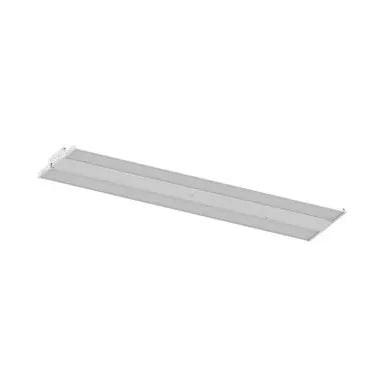
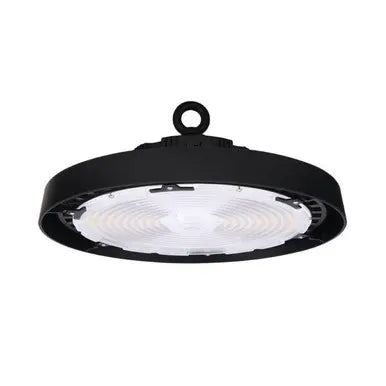
- Choose the fixture shape: UFO for many open areas, linear high bay for rows, aisles, and rectangular coverage.
- Select CCT based on the work being done, commonly 4000K or 5000K for commercial warehouse tasks.
- Verify voltage, dimming type, mounting hardware, damp or wet rating, and any sensor needs.
- Check DLC, ETL, UL, or other listings on the current product page, spec sheet, and utility paperwork before relying on them.
- For project-sized orders, confirm quantity, alternates, lead time, and custom pricing before checkout.
Start With The Space, Not The Fixture
High bay selection starts with the room and the work, not with a wattage number. A storage warehouse, active picking area, manufacturing floor, and gymnasium can all use high bays, but they do not need the same distribution or fixture count.
Write down the basics before choosing products:
- Ceiling or mounting height.
- Open floor area versus racked aisles.
- Existing fixture type and mounting points.
- Voltage at the fixture location.
- Dust, moisture, temperature, or washdown concerns.
- Whether the project needs controls, sensors, or dimming zones.
- Whether the customer needs submittal documents, DLC paperwork, or utility review.
If the job has tall ceilings, dense racks, critical work tasks, or a large fixture count, use a lighting layout or photometric review before ordering. A simple product swap may work for a small shop. A warehouse bid should be checked more carefully.
Choose UFO Or Linear High Bay Based On Layout
UFO and linear high bays can both work in warehouse lighting. The right choice depends on how the space is used and how the light needs to spread.
| Fixture type | Best fit | What to check |
|---|---|---|
| UFO high bay | Open warehouse areas, shops, gyms, manufacturing bays, and broad spaces without tight aisle geometry. | Beam angle, mounting height, hook or bracket hardware, wet or damp rating, sensor options, and total lumen output. |
| Linear high bay | Warehouse aisles, production rows, retail warehouse areas, and spaces replacing older fluorescent high bay rows. | Fixture length, suspension method, row spacing, aisle orientation, wattage/CCT selections, and whether the fixture is damp rated or wet rated. |
| Vapor tight or sealed high bay | Dusty, damp, wet, washdown, food processing, parking, or harsh areas. | IP rating, lens, gasketed housing, temperature range, listing, and whether the fixture is truly designed for that environment. |
Do not force one shape across the whole building. Some jobs use linear high bays in racked aisles and UFO high bays in open staging or shipping areas.
Use Lumens And Distribution Before Watts
Watts tell you power input. Lumens tell you light output. A lower-watt LED fixture can outperform an older higher-watt HID or fluorescent fixture, so wattage should not be the only buying filter.
DOE/FEMP guidance for commercial and industrial LED luminaires points buyers toward performance data such as light output, luminous efficacy, CCT, CRI, power factor, lumen maintenance, and application fit. For warehouse high bays, the useful purchasing questions are:
- How many lumens does the fixture deliver at the selected wattage?
- What beam angle or distribution does the fixture use?
- Will the fixture mount high enough to spread light evenly?
- Is the space open, racked, narrow, dusty, damp, or wet?
- Does the project need 4000K, 5000K, or selectable CCT?
- Are controls required now, or likely to be added later?
Be cautious with generic “one fixture per square foot” rules. They can help frame a first estimate, but they do not replace a layout when the work plane, rack height, fixture mounting, or owner requirements matter.
Verify Ratings, Voltage, Controls, And Listings
Before ordering, confirm the jobsite requirements against the current product page and spec sheet. Small differences matter when the fixture count is high.
| Spec | Why it matters |
|---|---|
| Input voltage | Many commercial high bays are 120-277V, but the site voltage still needs to match the fixture and controls. |
| CCT | 4000K and 5000K are common for commercial work areas. Selectable CCT can help when the final preference is not locked in. |
| CRI | CRI helps describe color rendering. Many commercial high bays list 80 CRI; verify if the task needs higher color quality. |
| Dimming | 0-10V is common on commercial high bays, but controls need to be compatible with the driver. |
| Damp or wet rating | Damp rated is not the same as wet rated or IP65. Match the fixture rating to the environment. |
| DLC / ETL / UL | Useful for submittals and rebate review, but verify the current listing and the utility’s rules before claiming eligibility. |
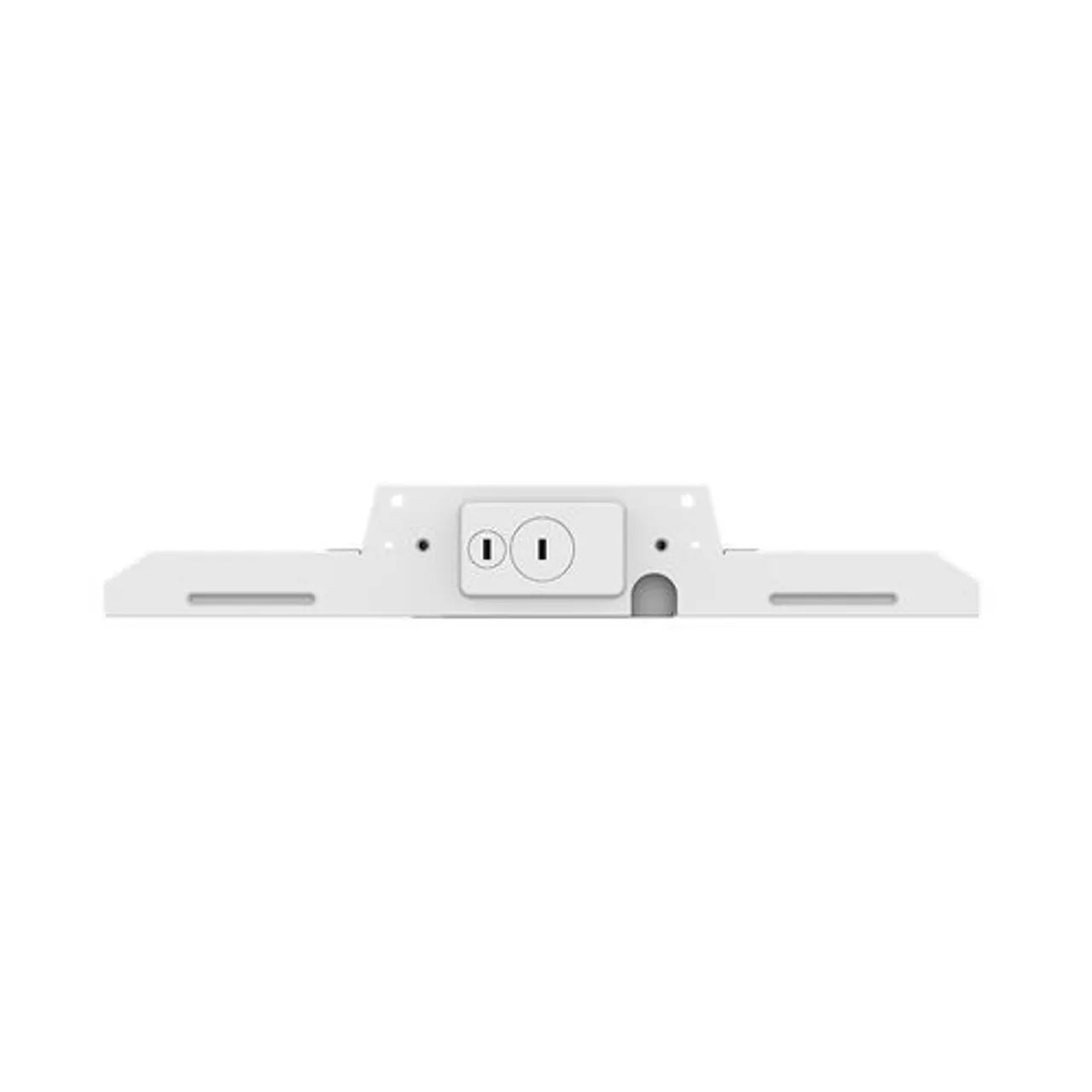
| Mounting hardware | Hook, chain, cable, pendant, or bracket mounting can affect labor and layout. Confirm what is included and what is separate. |
Last week’s Michelon guide covered 0-10V dimming in detail. For this high bay guide, the main point is simpler: controls are part of the fixture selection checklist, not an afterthought.
Practical Michelon Product And Category Fit
Michelon Supplies has live high bay product examples that fit the major selection paths contractors run into: linear high bays for row-style coverage and UFO high bays for compact high-output coverage.
For linear high bay projects, the Euri Lighting ELHB series gives you selectable wattage and selectable 4000K/5000K CCT. The Euri ELHB4-320W1023cws spec sheet lists 220W, 265W, and 320W settings with up to 43,200 lumens. The Euri ELHB2-155W1023cws spec sheet lists 90W, 130W, and 155W settings with up to 20,925 lumens. Both list 120-277V input, 0-10V dimming, 80 CRI, a 90 degree beam angle, damp rating, ETL, and DLC 5.1 Premium.
For UFO high bay projects, the Euri EUHB-150W3000sw and EUHB-240W3000sw spec sheets list selectable wattage and 3500K/4000K/5000K CCT. The 150W class unit lists up to 22,500 lumens at the 150W/4000K setting. The 240W class unit lists up to 36,000 lumens at the 240W/4000K setting. Both list 120-277V input, 0-10V dimming, 80 CRI, 90 degree beam angle, IP65 protection, wet rating, and DLC.
Recommended Michelon Products
| Product | Best use | Key specs to verify |
|---|---|---|
| Euri Lighting ELHB4-320W1023cws Linear High Bay | Longer warehouse rows, aisle-style layouts, and higher-output linear high bay projects. | 220W/265W/320W selectable, up to 43,200 lm, 4000K/5000K selectable, 120-277V, 0-10V dimming, damp rated, ETL, DLC 5.1 Premium. |
| Euri Lighting ELHB2-155W1023cws Linear High Bay | Smaller warehouse areas, stock rooms, and lower-output linear high bay rows. | 90W/130W/155W selectable, up to 20,925 lm, 4000K/5000K selectable, 120-277V, 0-10V dimming, damp rated, ETL, DLC 5.1 Premium. |
| Euri Lighting EUHB-150W3000sw UFO High Bay | Open warehouse zones, shops, and compact high bay replacements. | 100W/120W/150W selectable, up to 22,500 lm at 150W/4000K, 3500K/4000K/5000K selectable, 120-277V, IP65, wet rated, DLC. |
| Euri Lighting EUHB-240W3000sw UFO High Bay | Larger open areas and higher-output UFO high bay applications. | 200W/220W/240W selectable, up to 36,000 lm at 240W/4000K, 3500K/4000K/5000K selectable, 120-277V, IP65, wet rated, DLC. |
For a small order, start with the closest product match and confirm the spec sheet. For a warehouse retrofit, bid, or multi-area project, request custom pricing with fixture count, mounting height, voltage, CCT preference, and any controls requirements. If the fixture choice is not clear, contact support before placing the order.
FAQ
Are UFO high bays or linear high bays better for warehouses?
Neither is automatically better. UFO high bays are often a good fit for open areas, while linear high bays are often useful in rows, aisles, and spaces replacing older fluorescent high bay runs. Match the fixture shape to the layout and verify the lumen output, beam angle, and mounting method.
How many LED high bays do I need for a warehouse?
It depends on the warehouse size, ceiling height, rack layout, work tasks, fixture output, beam angle, mounting method, and target light level. A small shop may use a simple replacement plan. Larger warehouses should use a layout or photometric review before the order is placed.
Should I choose 4000K or 5000K for warehouse lighting?
Both are common in commercial spaces. 4000K is a neutral white that often works well for general warehouse and back-of-house areas. 5000K gives a cooler, brighter appearance that some buyers prefer for task-heavy or visibility-focused areas. Confirm owner preference before ordering a large quantity.
Does DLC listing mean the fixture qualifies for a rebate?
Not by itself. DLC listing may be part of rebate paperwork, but utility programs set their own rules and eligible product requirements. Verify the exact model on the current DLC Qualified Products List and confirm the utility program before promising a rebate.
Can I add sensors or dimming to high bays later?
Sometimes, but it is cleaner to plan controls before ordering. Confirm the fixture has the right driver, control input, sensor compatibility, mounting accessories, and wiring plan. Do not assume every dimmable high bay works with every sensor or control device.